Field Trip Friday: Atop Petrova Gora, Croatia

This week’s field trip takes us to the nation of Croatia, where Jacob, our newest intern, recently spent some time. After a steep, cramped and bouncy ride in the back seat of a friend’s Yugo, Jacob and his Croatian counterparts found themselves facing a strikingly odd mirrored structure – dilapidated yet dignified – overgrown with weeds.

They were standing in front of the Petrova Gora Partisan Monument, the focal point of a memorial complex dedicated to the partisan fighters who used the mountain as a field hospital and hideout during Yugoslavia’s resistance in World War II. In the late 1970’s, Tito, Yugoslavia’s President, commissioned fellow countrymen Vojnin Bakić (sculptor) and Berislav Šerbetić (architect) to create the monument. What they completed in 1981 was a building unlike anything many Croats had seen before.

Entirely shrouded in 3’x20’ stainless steel panels, the reinforced concrete structure is made up of six external parts, organically shaped, devoid of openings, and quite baffling to the eye. On first glance, one might be reminded of a Gehry-inspired design, something deconstructivist, expressive, and full of questions. Since its creation, it has had quite a history…

Petrova Gora existed as a “functioning” monument from 1981 until 1991 when the area fell into Serbian control in the Croatian War of Independence. Atop one of the highest ridges in the region, the monument was used as a military base where (supposedly) rockets had been fired into nearby cities. By 1995, the Croatian army had regained control of the region, and the monument was utilized as a field hospital for wounded soldiers. Following the end of the conflict, the monument received very limited attention and continued a gradual decline.

At the time of Jacob’s visit, the building was facing serious neglect and disrepair. Many of the large stainless panels had been removed, either by wind or by human hand, and the recent past was still very much present inside. Floors that once welcomed families into a history museum were littered with military jackets, stretchers, and decaying medical supplies.

Today it sits as a mysterious, haunting object; a reflective shell sans function (albeit the television and mobile transmitters atop the roof).

Another Gangsters Tour in March

Gangsters: Birth of Organized Crime in America
Sunday, March 7, 2010

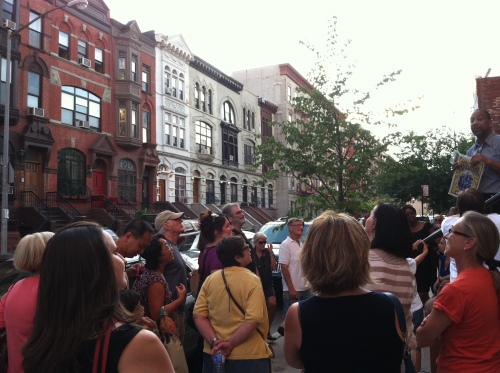
Due to overwhelming demand, OHNY and the Lower East Side History Project will offer another tour, covering 150 years of crime and vice in NYC. Trace the steps of criminal legends like Al Capone, Lucky Luciano, Meyer Lansky, and Bugsy Siegel–who earned their criminal stripes on the streets of the Lower East Side–and explore the roots of organized crime in America.

Dissect the myths and learn about how the Italian Mafia was established; visit the sites of Black Hand headquarters, Prohibition era speakeasies, shootouts and assassination attempts, and the homes and headquarters of some of the most powerful and infamous criminals in American history.

Led by Eric Ferrara, executive director of the Lower East Side History Project and the East Village Visitors Center and author of A Guide to Gangsters, Murderers and Weirdos of New York City’s Lower East Side.

Don’t miss out, purchase your tickets now!

(Image courtesy of Eric Ferrara.)

Gangsters: Birth of Organized Crime in America Tour

Gangsters: Birth of Organized Crime in America
Sunday, February 28, 2010

In collaboration with the Lower East Side History Project, OHNY offers a unique walking tour covering 150 years of crime and vice in NYC. Trace the steps of criminal legends like Al Capone, Lucky Luciano, Meyer Lansky, and Bugsy Siegel–who earned their criminal stripes on the streets of the Lower East Side–and explore the roots of organized crime in America.

Dissect the myths and learn about how the Italian Mafia was established; visit the sites of Black Hand headquarters, Prohibition era speakeasies, shootouts and assassination attempts, and the homes and headquarters of some of the most powerful and infamous criminals in American history.

Led by Eric Ferrara, executive director of the Lower East Side History Project and the East Village Visitors Center and author of A Guide to Gangsters, Murderers and Weirdos of New York City’s Lower East Side. Purchase your tickets here.

UPDATE: The tour is currently sold out, we are working on offering another one, so please stay tuned!

Field Trip Friday: The Adventures of the Kong Chair

One lucky winner won the polished aluminum Kong chair, designed by Philippe Starck and donated by Emeco (and valued at $2,595), through the OHNY Weekend Raffle this past October.  It turned out to be Debra, who lives in Syracuse and made a special trip down to New York City for the 7th Annual OHNY Weekend.  She has also participated and won in our focus on architecture photography competition in years past.

So the chair made the journey from our office to Syracuse, where Debra let us know that it arrived safe and sound:

What a joy it was to unwrap it and behold the puddles of light that shimmered over it. For now it’s gracing the entryway, but may find its way to the office or kitchen in a day or two. I love the way its reflective element accommodates its milieu.  The puddles of light move across it as you approach and then pass by.  It really is quite visually as well as tactilely engaging.  I think of it as liquid mercury.

So thank you to everyone who participated and many thanks to Emeco, for donating the Philippe Starck Kong chair for our first ever OHNY Weekend Raffle!

Field Trip Friday Returns: Renee’s Trip to Israel

Renee recently took a trip to Israel in December and we’ll be highlighting her trip in a series of Field Trip Fridays!

Today takes us to The White City, a collection of over 4,000 Bauhaus or International style buildings in Tel Aviv,  introduced in the 1920s and 1930s by German Jewish architects who settled in Palestine after the rise of the Nazis. Tel Aviv has the largest number of buildings in this style of any city in the world. In 2003, the United Nations Educational, Scientific and Cultural Organization (UNESCO) proclaimed The White City a World Cultural Heritage site, as “an outstanding example of new town planning and architecture in the early 20th century.”

The construction of the buildings that make up The White City continued until the 1950’s in the area around Rothschild Boulevard. Their design had to incorporate the extremes of the Mediterranean and desert climate. White and light colors reflect the heat and walls had to protect against the sun. Although large areas of glass help characterize the Bauhaus style in Europe, these were replaced with small recessed windows that limit the heat and glare. And long narrow balconies allow residents to enjoy the sea breeze.

Renee observed that while the area is beautiful,  many of the buildings have been neglected and could use some more attention. Fortunately, since legislation has passed, some have been refurbished and at least 1,500 more are slated for preservation and restoration.

Next week, we’ll share Renee’s visit to the Design Museum Holon, set to open this spring!

Field Trip Friday: Design Museum Holon

Continuing with Renee’s recent trip to Israel in December, today takes us to the Design Museum Holon.

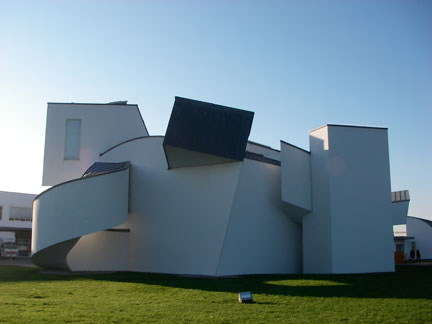
Holon, located just outside Tel Aviv, has recently announced February 2, 2010 as the inauguration date for Design Museum Holon and its building by Ron Arad Architects. After four years of construction, the museum will finally open to the public. It is Ron Arad’s first completed commercial architectural project of this scale and he makes use of COR-TEN, or weathered steel, which forms five bands of different oranges and reds.

Holon has been campaigning and investing in the development of their city’s cultural identity over the last few years and in 2003, Ron Arad Associates were invited to design and develop the first Israeli museum dedicated to design.

Renee noted that the building’s structure, especially when photographed, reminded her of a painted Richard Serra, and the design seems very innovative for the area. There is, however, the pre-exisiting Mediatheque Holon, which joins the new museum and is located right next to it. In comparison to this building, the Design Museum is very different and the shapes and colors are in contrast to the existing Mediatheque Holon.

The Design Museum will have site-specific exhibitions by invited international curators as well as traveling exhibitions and a historical collection of Israeli design will also be included. The first exhibition opens on March 4, 2010.

More photos of the construction process can be seen here.

Happy 2010

Happy New Year from all of us at OHNY!

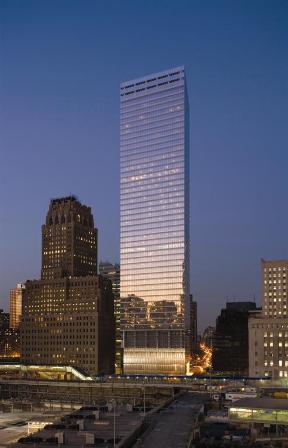
7 TWC, Sean Hemmerle

Thank you to everyone who donated  in support of openhousenewyork. Your commitment and contribution to OHNY and its Annual openhousenewyork Weekend is very much appreciated, and helps OHNY open hundreds of sites throughout New York City’s five boroughs and serve over 185,000 individuals per year.

The 7th Annual OHNY Weekend was our most successful event yet. Thousands of people joined in for what was an incredible celebration of New York City’s architecture. The two-day cultural event, which took place on October 10th and 11th, included 192 of the city’s most exemplary spaces and places—many not usually open to the public—and 130 free programs such as on-site tours, talks, workshops and performances in neighborhoods in all five boroughs. In addition, OHNY hosted the Second Annual OHNY Weekend Family Festival, welcoming 130 children and families who participated in range of designer- and educator-led interactive projects and activities.

We look forward to celebrating the 8th Annual openhousenewyork Weekend on October 9th & 10th.

All of us at openhousenewyork are most grateful for your support.

Atlantic Avenue Tunnel Tours

Photo courtesy of Ellen McKnight

More Atlantic Avenue Tunnel Tours
Saturday & Sunday, January 23 & 24
Saturday, January 30

Due to high demand, OHNY and the Brooklyn Historic Railway Association are again offering special guided tours of the world’s oldest subway tunnel, built in 1844 and constructed in seven months using only hand tools and primitive equipment. Bob Diamond, who rediscovered the tunnel in 1980, will lead two tours through the half-mile long underground space. Purchase tickets here.

Guests should wear sneakers or boots (no high-heeled shoes) and bring a flashlight.

Please be aware that all attendees will have to sign a waiver and please take note of the following:

  • the tunnel entrance is a manhole in the middle of Atlantic Avenue, which you climb down via ladder
  • there is also a set of wooden steps that are unevenly spaced, without a hand rail
  • remember to wear appropriate footwear and clothing– it is an underground tunnel and a bit dirty
  • there will be 70 people on each tour
  • the tour takes about 1 1/2 hours, as we all have to enter and exit from one manhole

That being said, there will be volunteers to help you down the steps and accompany the tour group. Check out photos from our recent tours and read comments from past attendees below:

I am so happy to have access to this – without heavy security, merchandising, and everything else that usually gets in the way of feeling directly linked to a historical place… but that’s why I love OHNY already!

This was awesome! If anyone has any doubt to go check this out don’t this is coolest urban spelunking experience your gonna get.

Thanks again for putting the tour on.  It was very fun and Mr. Diamond gave quite a presentation.

Field Trip Friday: “The Young Victoria” at the Museum of Arts & Design

This past Wednesday, Jessica and I attended a screening of The Young Victoria at the Museum of Arts and Design, courtesy of New York Magazine. The film was introduced by NYmag.com’s fashion editor and two representatives from Swarovski, who spoke about their involvement in the design and production of the jewelery featured in the film, including Queen Victoria’s coronation crown and scepter. The film was beautiful, especially the costumes, and provided an interesting and romantic look into Queen Victoria’s early reign and relationship with Prince Albert. After watching the film, I went home and researched the Queen and her descendants on Wikipedia!

Museum of Arts & Design

Museum of Arts and Design

Inside the lobby

Theatre screening

Field Trip Friday: Las Vegas, NV

Jessica headed out West to Las Vegas, NV over the Thanksgiving holiday. Temperatures in the low 70s for late November and waking up to the bright, sun shining through her window every single day, what more could a girl ask for?

When you think of Vegas, what immediately comes to mind is most probably the Las Vegas Strip. Finding historic buildings on the Strip is a rarity since many hotel and casino owners tend to implode defunct buildings to construct brand, new ones to entice tourists to gamble, shop, dine, and stay at their casinos. Walking along the Strip, you can almost imagine that you are transported to places around the world like Venice, Rome, Egypt, and Paris without requiring your passport with each specially-themed hotel and casino.

Right now, the most talked about new complex of buildings on the Strip is CityCenter – featuring luxury hotels, residential apartments, entertainment districts, and high-end retail shops. The buildings and interiors were designed by recognized architecture firms including Pelli Clarke Pelli Architects Studio Daniel Libeskind, Rockwell Group, Foster + Partners, and Gensler.

Moving away from the Strip, there are plenty of other sites to explore such as Red Rock Canyon – 197,000 acres within the Mojave Desert. A newly constructed visitor’s center serves as a hub for information and interpretation about recreation opportunities and hiking trails, wildlife including wild horses and burros, vegetation, geology, and cultural resources.

Another popular and quite impressive destination is the Hoover Dam. It was completed in 1936 and is the world’s largest hydroelectric power generating plant.

The trip would not be complete without a trip to Ethel’s Chocolate Factory. Founded in 1981 by Forrest Mars, Sr., the factory was created as tribute to his mother who made gourmet chocolates in their Tacoma, Washington home when he was young child. There were plenty of tasty samples as well as a botanical cactus garden right outside the factory to burn off a few calories!

Overall, the trip proved to be a great, sun-filled relaxing two week experience for her with plenty of places to see and things to do other than gambling!

Bellagio Hotel & Casino - autumn theme

Red Rock Canyon

Hoover Dam

Ethel M Chocolate Factory

Ethel M Chocolate Factory & Cactus Garden

Next Page »


openhousenewyork

Twitter